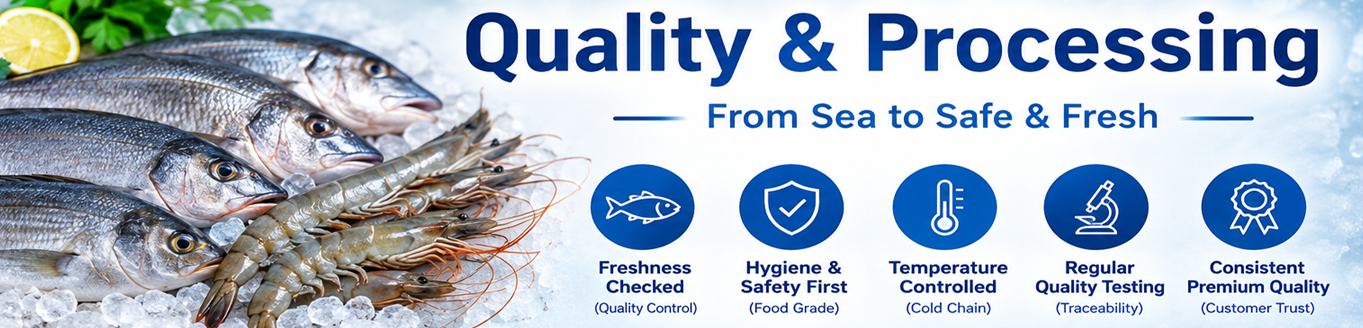
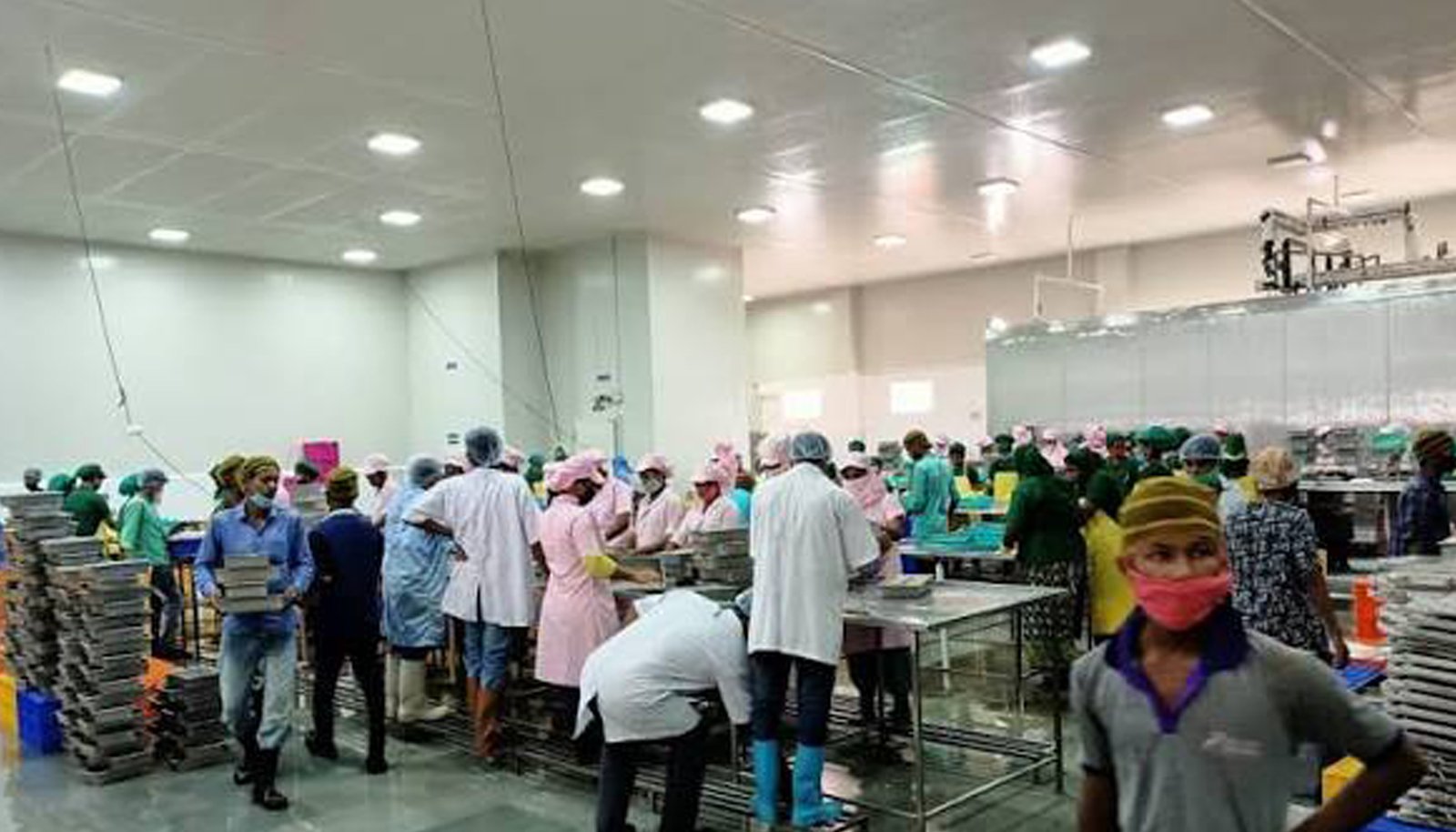
Quality control in seafood processing focuses on maintaining freshness, food safety, hygiene, and product quality from raw-material reception through final packing. Typical controls include:
In short: the objective of quality and processing at a seafood company such as Ami Seafood is to deliver a product that is fresh, hygienic, safe, properly processed, consistently graded, and suitable for domestic or export markets.
Quality and processing refer to how well a system makes an output and how reliably it runs. In manufacturing or food processing, good processing means steady steps that stop mistakes. Good quality means the final item matches the rules and is safe to use.
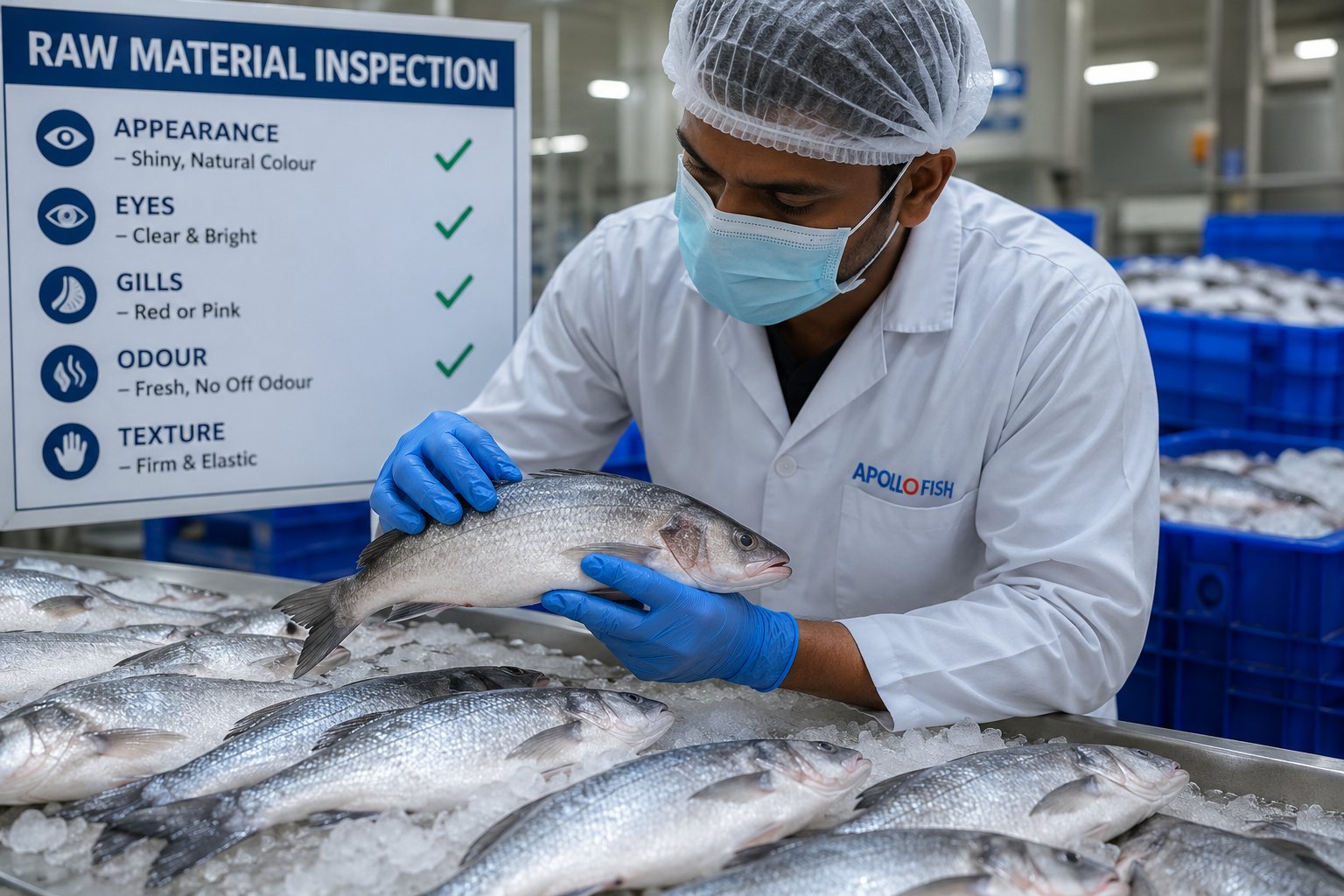
Raw Material Inspection:
Raw material inspection is the first and one of the most important steps in seafood processing. At this stage, incoming fish and seafood are carefully checked to ensure they are fresh, safe, and suitable for processing.
Key checks include:
Freshness and appearance – color, texture, smell, and overall condition.
Temperature – maintaining the required chilled or frozen temperature.
Size and quality – checking that the raw material meets product specifications.
Cleanliness – inspecting for contamination, foreign materials, or damage.
Documentation and traceability – verifying supplier, batch, and receiving details.
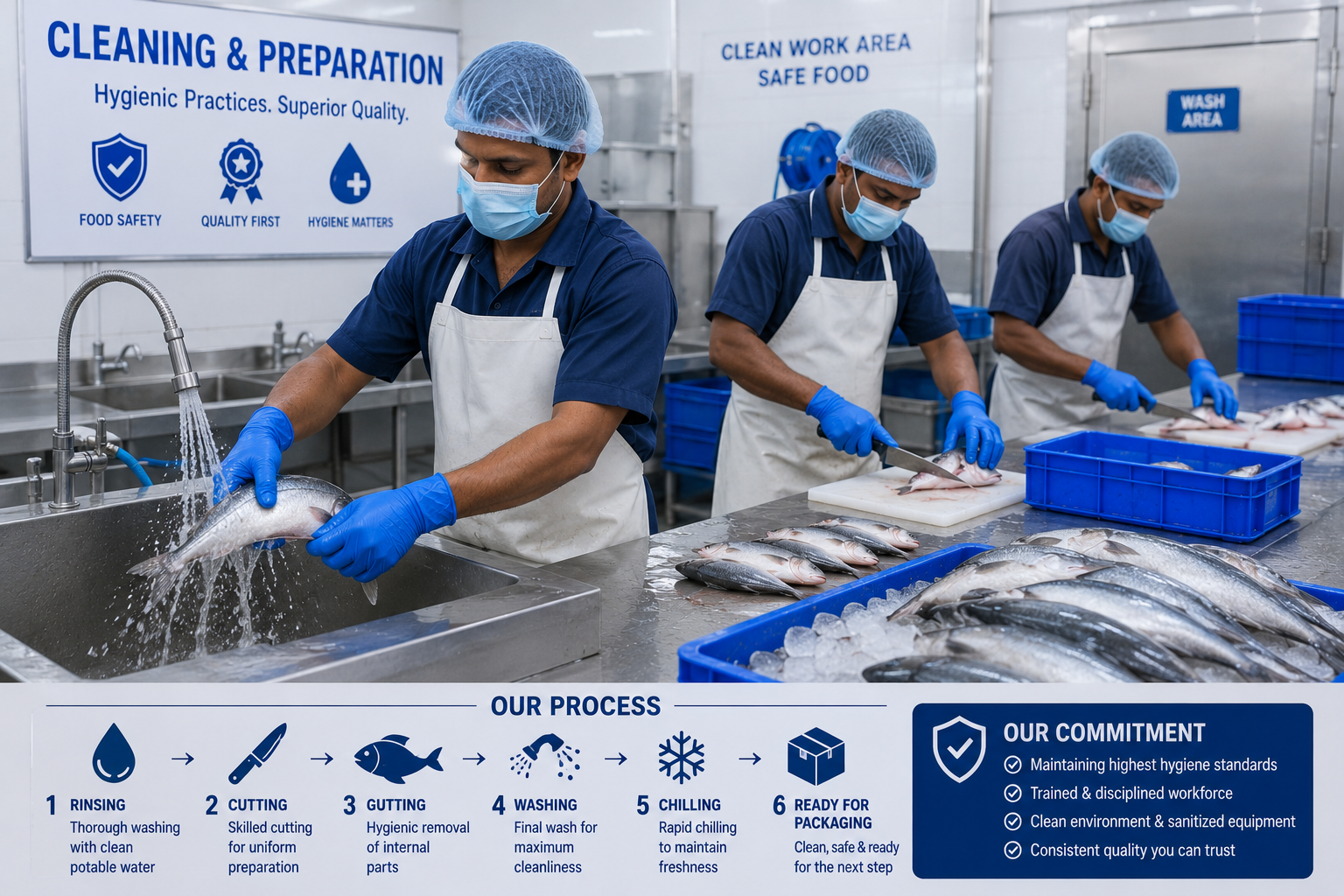
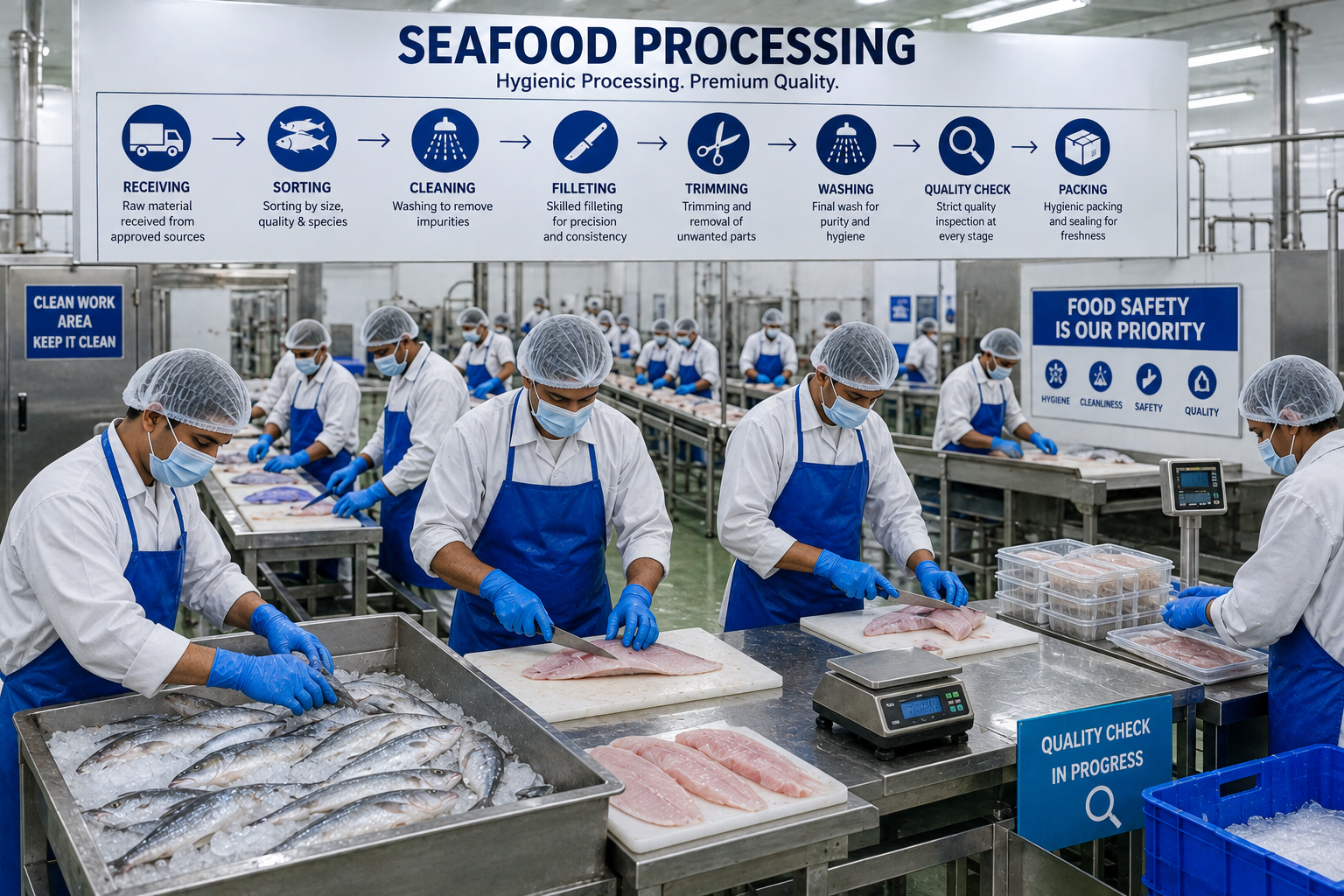
Cleaning & Preparation is an important stage in seafood processing that ensures the raw material is clean, hygienic, and ready for further processing.
Key activities include:
Washing: Fish and seafood are thoroughly washed with clean, chilled water.
Sorting: Raw materials are sorted according to size, quality, and product requirements.
Cleaning: Scales, unwanted parts, debris, and other impurities are removed.
Cutting & trimming: The seafood is cut, peeled, deveined, or trimmed according to the required product specification.
Hygiene control: Equipment, work surfaces, and workers are maintained under strict sanitary conditions.
Temperature control: Chilled conditions are maintained throughout preparation to preserve freshness.
Cleaning & Preparation:
Processing:
Processing is the stage where cleaned and prepared seafood is converted into the required final product while maintaining quality, freshness, hygiene, and food safety.
Key activities include:
Cutting and filleting: Seafood is shaped according to product requirements.
Deveining and peeling: Unwanted parts are removed where necessary.
Grading: Products are separated based on size, weight, and quality.
Cooking or other treatment: Depending on the product, seafood may be cooked or treated using approved methods.
Quality control: Products are inspected for appearance, texture, size, and cleanliness.
Temperature control: Proper chilled or frozen conditions are maintained throughout processing.
Hygiene and sanitation: Equipment and processing areas are regularly cleaned and sanitized.
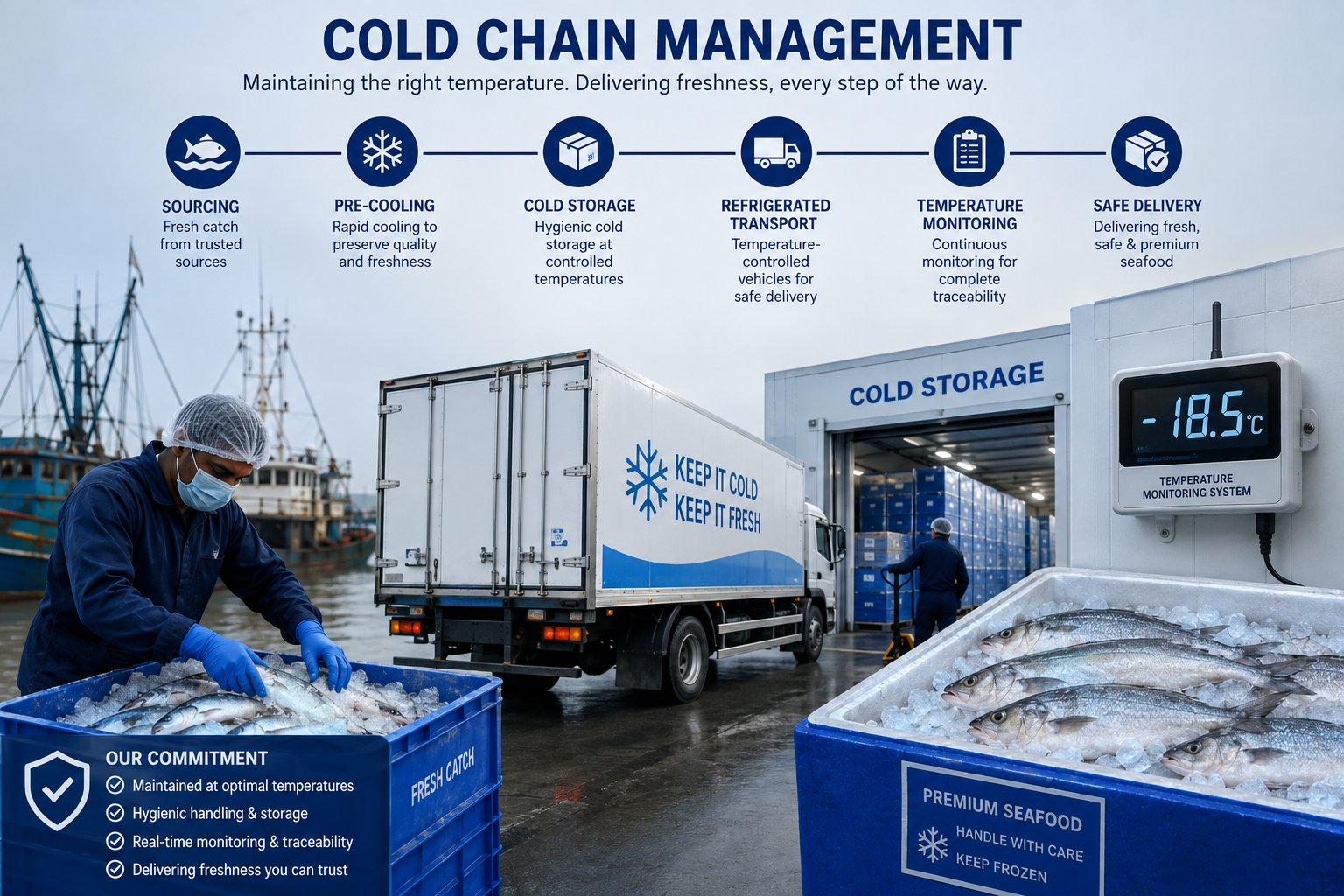
Cold chain management is the continuous control of temperature from the time seafood is received until it reaches the customer. It is essential for maintaining freshness, quality, and food safety.
Key points include:
Receiving: Raw seafood is checked and quickly placed under controlled-temperature conditions.
Chilling: Seafood is kept at appropriate chilled temperatures to slow bacterial growth.
Freezing: Products are frozen when required to preserve quality and extend shelf life.
Cold storage: Finished products are stored in temperature-controlled cold rooms or freezers.
Temperature monitoring: Temperatures are regularly checked and recorded throughout storage and transportation.
Cold transportation: Refrigerated or insulated vehicles are used to maintain the required temperature during delivery.
Fast handling: Unnecessary delays outside controlled temperatures are avoided.
Traceability: Temperature records and batch information help maintain control throughout the supply chain.
Cold-Chain Management
Packaging & Freezing:
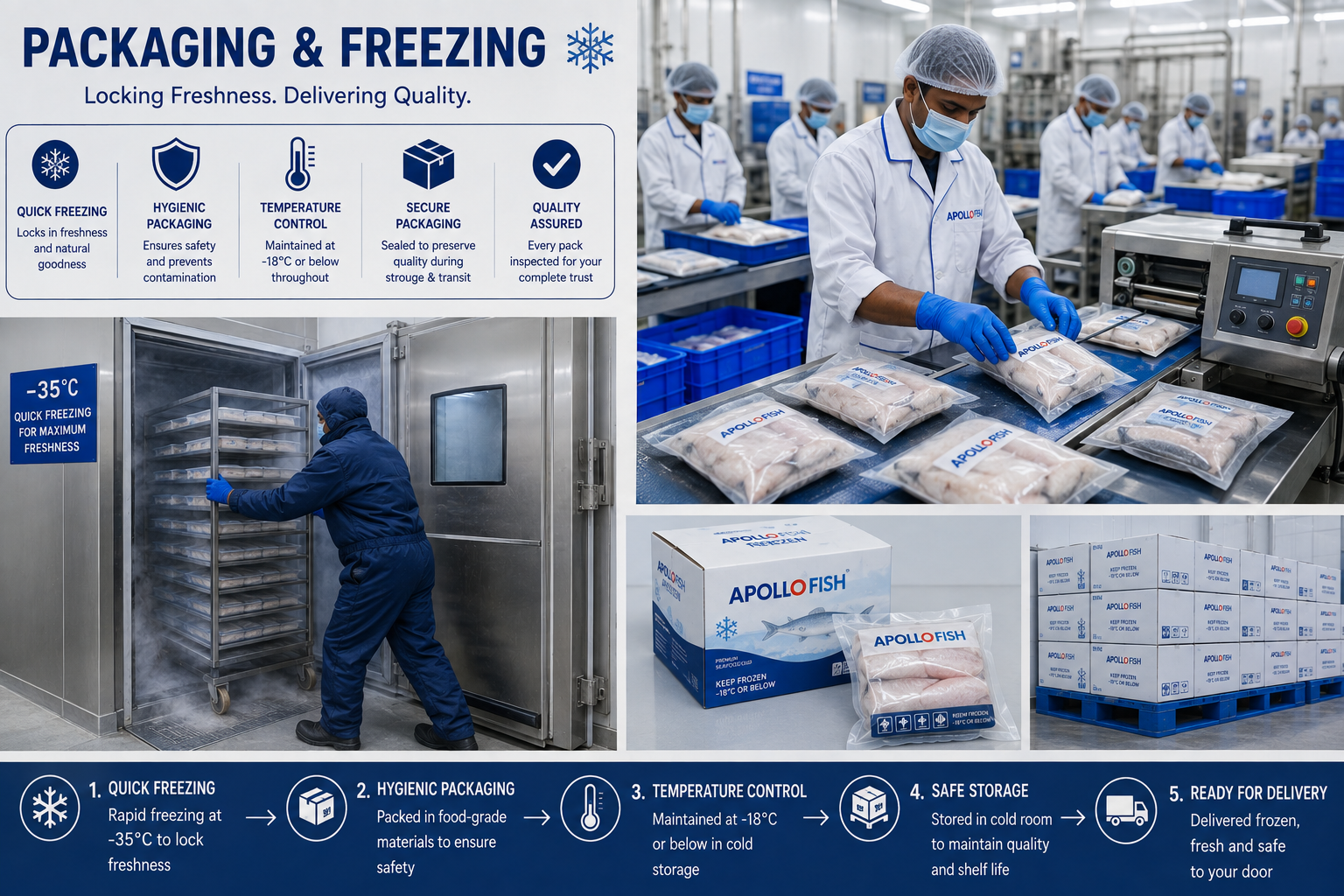
Packaging & Freezing is an important stage in seafood processing that protects the product, preserves its quality, and extends its shelf life.
Key points include:
Packaging: Seafood is packed using clean, food-grade packaging materials.
Portioning: Products are packed according to the required weight, size, and customer specifications.
Sealing: Packages are properly sealed to prevent contamination and moisture loss.
Labeling: Product information such as batch number, weight, production date, and storage instructions is provided.
Freezing: Seafood is rapidly frozen to maintain freshness, texture, and nutritional quality.
Temperature control: Frozen products are stored and maintained at the required low temperature.
Quality inspection: Packaging and frozen products are checked for damage, leakage, or other defects.
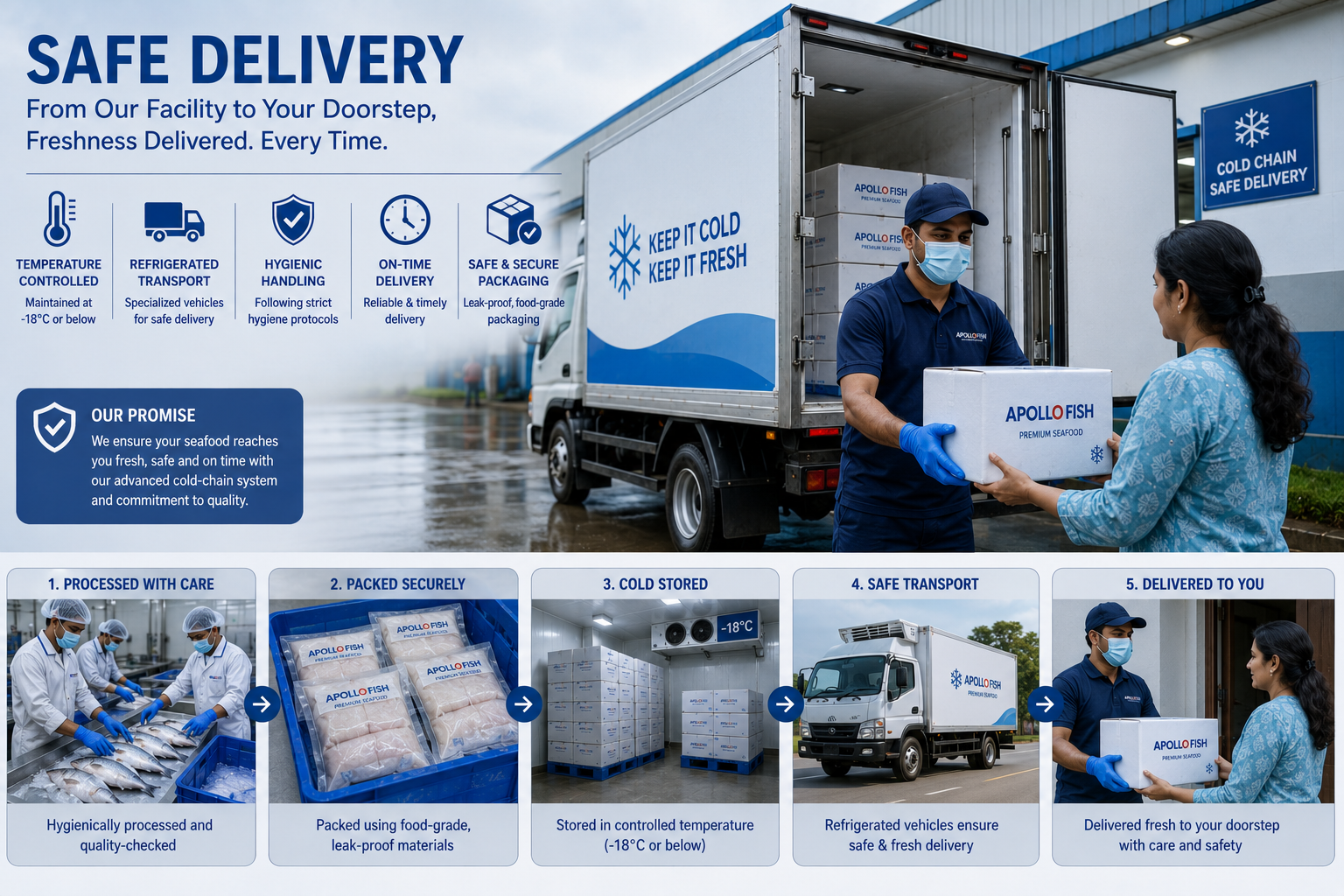
Safe Delivery is the final stage of seafood processing, where products are transported to customers while maintaining quality, freshness, hygiene, and temperature control.
Key points include:
Temperature control: Frozen and chilled seafood is kept at the required temperature during transportation.
Proper packaging: Packages are securely sealed to prevent leakage, contamination, and damage.
Cold-chain maintenance: Refrigerated or insulated vehicles are used to protect the product during transit.
Hygienic handling: Products are handled carefully using clean equipment and proper hygiene practices.
Loading and unloading: Seafood is moved quickly to minimize exposure to unsuitable temperatures.
Product verification: Quantity, packaging condition, labels, and batch details are checked before dispatch.
Timely transportation: Products are delivered within the planned time to maintain freshness and quality.
Final inspection: Delivery conditions are monitored to ensure the product reaches the customer safely.
Safe delivery ensures that seafood reaches the customer fresh, hygienic, undamaged, and in good condition.